Perfectionism in Gifted Learners
by Wes Rochester
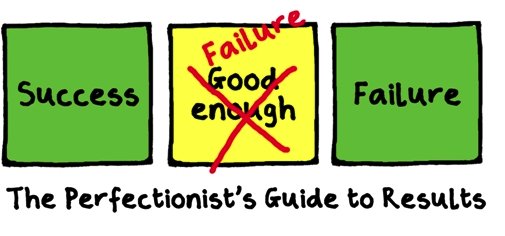
Perfectionism is, quite simply, the need to be perfect. It is an overwhelming desire to achieve perfection. Perfectionists tend to set exceptionally high goals and expectations that cannot realistically be achieved. They view anything short of perfection as a failure, which causes feelings of low self-worth. Some people strive for perfection in all aspects of life; others seek perfection only in certain tasks.
The tendency toward perfectionism is one of the greatest challenges facing the parents of gifted learners. On one hand, perfectionism is one of the characteristics that drives gifted children to achieve and succeed. The dark side of perfectionism, on the other hand, may lead those same children to experience frustration, anxiety, and low self-esteem.
The Link Between Giftedness and Perfectionism
Are gifted learners more likely than others to be perfectionists? The research on this matter is not yet clear because different studies have produced different results. Some studies demonstrate a higher rate of perfectionism among gifted students, while other studies show approximately the same rate of perfectionism in gifted students and the general population (Codd).
Nonetheless, a link between giftedness and perfectionism appears to exist. The parents and teachers of gifted learners “often report a high level of perfectionism among these children” (Codd). According to Schuler’s study in 1999, “87.5% of the gifted adolescents in accelerated courses […] were identified as having perfectionist tendencies (Codd). Another study revealed that “approximately 20% of gifted children suffer from perfectionism to the degree it causes problems” (Perfectionism). As a parent, you should recognize that it is not uncommon for gifted learners to experience the negative consequences that accompany perfectionism.
How Perfectionism Develops
Perfectionism arises from a combination of nature and nurture. Some are genetically predisposed to perfectionism; they seem to be perfectionists from birth. Even from an early age, a child may display the intense need to accomplish tasks perfectly (Pyryt). For example, many can likely recall watching a young child smash a Lego project because it does not look exactly like the picture on the box (Berry). For others, perfectionism is a learned behavior. Listed below are a variety of ways that children acquire perfectionist tendencies:
- Some gifted children truly do not make many mistakes at an early age. Perfection develops as a significant part of their personality (Shaughnessy).
- Because of a child’s early success, parents and teachers come to expect perfection from the child (Shaughnessy). The desire to please others then leads the child to seek perfection in all tasks (Perfection).
- Parents and/or teachers disapprove of a child’s imperfect accomplishments, for example, by criticizing A- work. The child thus learns that only perfection is good enough (Pyryt).
- Because of the importance of academics in today’s world, parents place too much pressure on children to succeed (Marano).
Healthy vs. Unhealthy Perfectionism
Is perfectionism a positive or negative characteristic in gifted learners? The idea of perfectionism has negative connotations for many people. After all, many scholars have noted the negative qualities associated with perfectionism. Burns, for example, describes perfectionists as “ ‘people who strain compulsively and unremittingly toward impossible goals and who measure their own worth entirely in terms of productivity and accomplishment’ ” (Codd, citing Burns, 1980). Moreover, Pachts describes perfectionism as “ ‘the striving for that nonexistent perfection that keeps people in turmoil and is associated with a significant number of psychological problems’ ” (Codd, citing Pachts, 1984).
As the parent of a gifted learner, however, you should not overlook the positive attributes of perfectionism. As psychologist Ellen Winner notes, “ ‘being a perfectionist could well be a good thing if it means having high standards ultimately leading to high achievement’ ” (Codd, citing Winner, 1996, p. 215). Perfectionism is thus one of the qualities that often makes gifted learners so successful. Psychologist Abraham Maslow has even gone so far as to suggest that perfectionism is a healthy quality that leads to self-actualization (Berry).
The better approach is not to think of perfectionism as good or bad, but as existing on a continuum between healthy and unhealthy behaviors. The characteristics and behaviors associated with healthy and unhealthy perfectionism are listed below:
Healthy
- Needing a high degree of order and organization (Berry, Codd)
- Showing attention to detail (Berry)
- Setting high but attainable goals and expectations (Berry)
- Accepting and learning from mistakes (Berry, Codd)
- Preferring high parental expectation (Berry, Codd)
- Using positive coping strategies to manage perfectionist tendancies (Berry, Codd)
- Setting positive priorities in their lives (Codd)
- Following role models who emphasize striving for one’s best, but accepting imperfection (Berry, Codd)
- Viewing personal effort as an integral part of perfectionism (Berry, Codd)
- Experiencing satisfaction in life (Berry)
Unhealthy
- Experiencing anxiety about making errors (Berry, Codd)
- Setting extremely high and unrealistic standards (Berry, Codd)
- Experiencing anxiety about mistakes and react negatively to mistakes (Berry)
- (Mis)perceiving excessive expectations and pressure from others (Berry, Codd)
- (Mis)perceiving high criticism from others (Berry, Codd)
- Experiencing self-doubt and questioning their own judgments (Berry, Codd)
- Lacking positive coping strategies to manage their perfectionism (Berry, Codd)
- Displaying a constant need for approval (Berry, Codd)
- Exhibiting a high need for control (Codd)
- Being highly critical of others (Codd)
- Demonstrating black and white thinking with no gray area. For example, perfection is good, but making a single mistake is bad (Berry)
- Experiencing dissatisfaction in life (Berry)

Consequences of Perfectionism
Despite the many positive attributes associated with perfectionism, the unhealthy characteristics can lead some gifted learners to dysfunction. Listed below are some of the negative effects of perfectionism:
- Unhealthy perfectionism may lead to physical and mental health problems, including the following: stress and anxiety, depression, insomnia, eating disorders (anorexia nervosa and bulimia), pain (migraines and stomach aches), obsessive-compulsive personality disorders, panic disorder and suicide” (Codd; Shaughnessy).
- Unhealthy perfectionism may lead to procrastination and task avoidance. Some perfectionists obsess so much over every single detail that the process of completing a task becomes too painful, which leads to procrastination. In other cases, the fear of failure and the threat of criticism from others cause perfectionists to avoid tasks altogether (Chua).
- Ironically, perfectionism can lead to underachievement. This is called “the perfection paradox.” Being overly concerned with mistakes leads to failure, both in athletics and academic fields. This phenomenon can be seen in students who choke under pressure on major tests (Marano).
If your child experiences any of the unhealthy characteristics above, or suffers the consequences of perfectionism to the degree that it causes problems, you may want to seek the assistance of a psychologist who understands perfectionism and is familiar with the needs of gifted learners. You may also want to use the coping strategies that follow.
Coping Strategies for Parents and Students
- Identify the source of pressure. Gifted children often feel pressure to achieve perfection. This pressure may come from within the child or from an outside source, such as parents, teachers, or peers. Parents should help children identify the sources of pressure that fuel their perfectionism. Steps can then be taken to alleviate that source of pressure (Berry).
- Learn to separate one’s self-worth from graded products. Parents should help their children to separate their self-concept from the grades they receive on assignments. One way to do this is to review project rubrics with the child. The parent can help the child see how the project is missing certain components required by the rubric. In this way, the child can view point deductions as simple mistakes that can be corrected. The child will also learn that the grade is not a criticism of him or her as a person (Pyryt).
- Manage time according to the value of an assignment. Perfectionism often causes difficulty with time management. For example, the gifted student may spend an inordinate amount of time perfecting a minor assignment that is worth only 5% of the final grade, leaving insufficient time to complete a major assignment worth 25%. Parents can help their children to allocate the proper amount of time to each assignment based on its value to the class (Pyryt)
- Learn to accept mistakes. Teach children the concept of constructive mistakes. Perfectionist children should learn that mistakes are a necessary part of the learning process. Correcting mistakes is required to improve one’s skills.
- Provide safe opportunities for failure. Parents should provide opportunities for their children to engage in fun and creative activities that allow for risk taking. Such activities provide a safe environment for children to experience failure (Codd).
- Study the lives (and failures) of eminent people. Working together, parents and children should study the biographies of successful historical figures. These biographies will teach a central lesson: every successful person fails. In fact, overcoming failures is often the key characteristic that leads to success. This lesson will help perfectionists to accept their own failures as learning opportunities (Pyryt).
- Model healthy approaches. Parents should recognize that, like their children, they may have perfectionist tendencies as well. Parents should avoid unhealthy perfectionism in their own lives and model healthy approaches for their children (Perfectionism). For example, parents should model the healthy acceptance of mistakes for their children (Codd). Parents should teach their children to enjoy fun activities without the need for high achievement (Berry). Most importantly, parents should encourage and support their children even when goals are not met (Perfectionism).
- Distinguish between excellence and perfection. Parents should teach children that excellence is different from perfection. Children should recognize that we love many things in life that are excellent, even though they are not perfect. Children should understand that they can achieve excellence, but not perfection (Berry).
- Focus on process over product. Parents should teach children healthier ways to develop their self-concepts. They should teach children that they have inherent self-worth that does not depend on a perfect product. Parents should encourage students to evaluate themselves according the process and improvement of their work, and not merely by the finished product (Codd).
- Set attainable goals. Perfectionists tend to set goals that are unrealistic. They create lists of daily tasks that can never be achieved. Parents can help their perfectionist children to set short and long-term goals that are practical and attainable (Pyryt).
- Break projects into incremental steps. Perfectionists who like to obsess over every minute detail are often overwhelmed by large, time-consuming projects. Parents can help their perfectionist children by dividing large projects into a set of smaller, incremental steps. These small steps will provide an early and frequent sense of accomplishment for the project (Pyryt).

Resources for South Carolina and Greenwood District 50
- The South Carolina Consortium for Gifted Education: http://www.scgifted.org/
- South Carolina Department of Education: Gifted and Talented Page: http://ed.sc.gov/instruction/standards-learning/advanced-academic-programs/gifted-and-talented/
- Greenwood District 50: Academically Gifted and Talented Program: http://www.gwd50.org/cms/lib01/SC01000859/Centricity/Domain/41/Brochure1516.pdf
Resources for Further Reading on Perfectionism
- Antony, M. M., & Swinson, R. P. (1998). When perfect isn't good enough: Strategies for coping with perfectionism. Oakland, CA: New Harbinger Publications.
- Berry, S. (n.d.). Helpful Tips for Parents of Perfectionistic Gifted Learners. Retrieved June 15, 2016, from http://www.ctgifted.org/website/publish/gifted/index.php?Helpful-Tips-for-Parents-of-Perfectionistic-Gifted-Learners-16
- Chua, C. (n.d.). 6 Hidden Downsides of Perfectionism. Retrieved June 16, 2016, from http://personalexcellence.co/blog/perfectionism-downsides/
- Codd, M. (n.d.). Perfectionism and the Gifted Adolescent. Retrieved June 15, 2016, from http://www.riage.org/articles/perfectionism-and-the-gifted-adolescent/
- Galbraith, J. (1998). The Gifted Kids Survival Guide For Ages 10 And Under (Revised edition). Minneapolis: Free Spirit.
- Galbraith, J., & Delisle, J. R. (1987). The Gifted Kids Survival Guide: A Teen Handbook (Revised edition). Minneapolis: Free Spirit.
- Greenspon, T. (2001). Freeing Our Families From Perfectionism. Minneapolis: Free Spirit.
- Marano, H. (n.d.). Pitfalls of Perfectionism. Retrieved June 16, 2016, from https://www.psychologytoday.com/articles/200803/pitfalls-perfectionism
- Perfectionism. (n.d.). Retrieved June 15, 2016, from https://www.nagc.org/resources-publications/resources-parents/social-emotional-issues/perfectionism
- Pyryt, M. (2004, June). Helping Gifted Students Cope with Perfectionism. Retrieved June 15, 2016, from http://www.davidsongifted.org/Search-Database/entry/A10459
- Schuler, P.A. (1999). Voices of perfectionism: Perfectionistic gifted adolescents in rural middle school. (Research Monograph 99140). Storrs, CT: University of Connecticut, The National Research Center on the Gifted and Talented.
- Shaughnessy, M. (n.d.). Sylvia Rimm on Perfectionism in the Gifted. Retrieved June 15, 2016, from http://sengifted.org/archives/articles/sylvia-rimm-on-perfectionism-in-the-gifted-an-interview-by-sengs-editor-in-chief-michael-shaughnessy
- Walker, S. Y. (2002). The Survival Guide For Parents Of Gifted Kids: How to Understand, Live With, And Stick Up For Your Gifted Child. Minneapolis: Free Spirit.
- Winner. E. (1996). Gifted Children. New York: Basic Books.
References
Berry, S. (n.d.). Helpful Tips for Parents of Perfectionistic Gifted Learners. Retrieved June 15,
2016, from http://www.ctgifted.org/website/publish/gifted/index.php?Helpful-Tips-for-
Parents-of-Perfectionistic-Gifted-Learners-16.
Chua, C. (n.d.). 6 Hidden Downsides of Perfectionism. Retrieved June 16, 2016, from
http://personalexcellence.co/blog/perfectionism-downsides/.
Codd, M. (n.d.). Perfectionism and the Gifted Adolescent. Retrieved June 15, 2016, from
http://www.riage.org/articles/perfectionism-and-the-gifted-adolescent/.
Marano, H. (n.d.). Pitfalls of Perfectionism. Retrieved June 16, 2016, from https://
www.psychologytoday.com/articles/200803/pitfalls-perfectionism.
Perfectionism. (n.d.). Retrieved June 15, 2016, from https://www.nagc.org/resources-
publications/resources-parents/social-emotional-issues/perfectionism.
Pyryt, M. (2004, June). Helping Gifted Students Cope with Perfectionism. Retrieved June 15,
2016, from http://www.davidsongifted.org/Search-Database/entry/A10459.
Shaughnessy, M. (n.d.). Sylvia Rimm on Perfectionism in the Gifted. Retrieved June 15, 2016,
from http://sengifted.org/archives/articles/sylvia-rimm-on-perfectionism-in-the-gifted-an-interview-by-sengs-
editor-in-chief-michael-shaughnessy.

